Your skincare routine will never fix your dry skin.

Summary: Another moisturiser. Another serum. The same dry skin. The question that led me to Youth Elixir was simple: what’s making it so hard for skin to stay hydrated in the first place?
You know the feeling. You moisturise in the morning, your skin looks great. By the afternoon, your cheeks feel dry and flaky again, so you apply more before bed.
But not just moisturiser. Then comes the cream, the hydrating serum, the overnight mask. Each one somehow found its way into your routine, but one thing still remains... your dry skin!
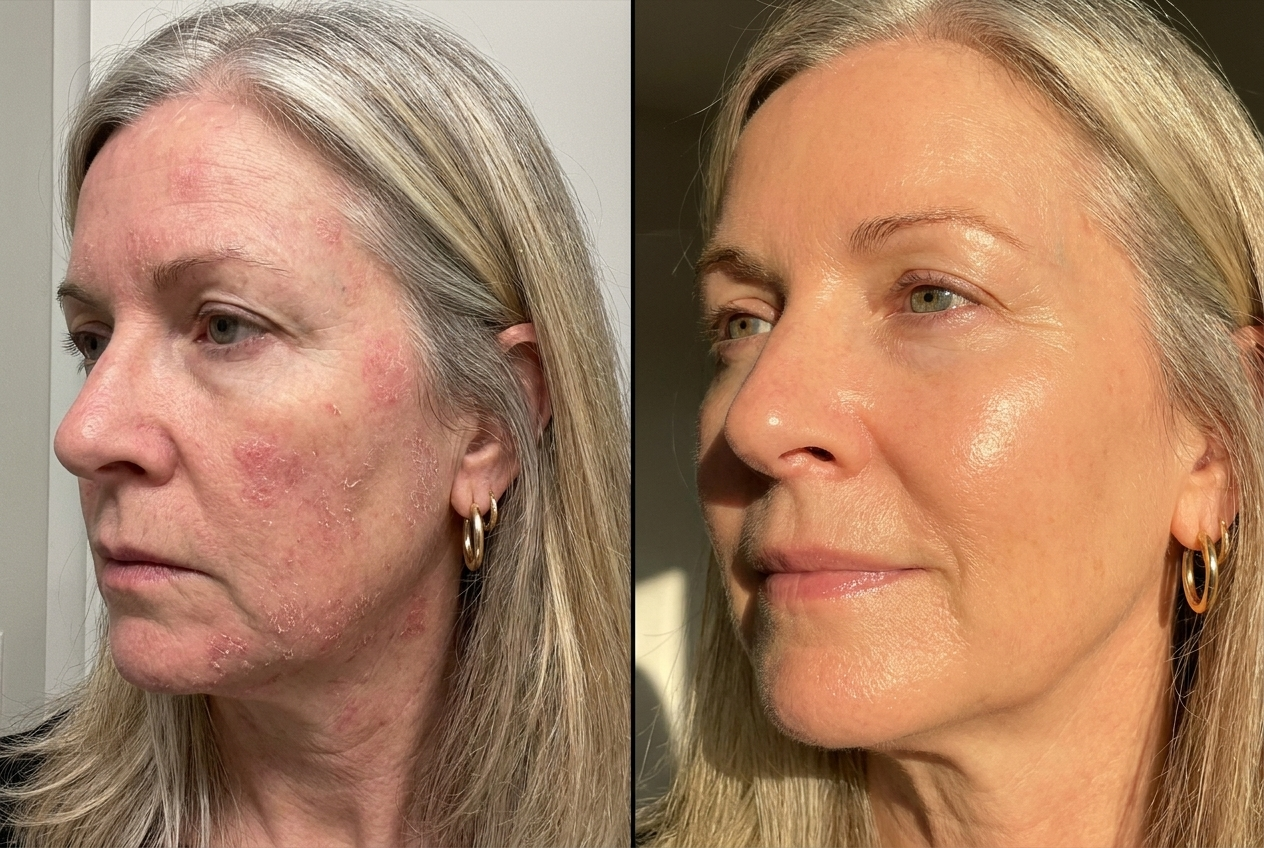
Most women (including myself) just assume their skin needs more. More moisture. More products. More expensive products.
But there's a better question: What's making it so hard for your skin to stay hydrated in the first place?
Sure moisturisers can help, serums too, masks as well of course. But these all have one thing in common. They're only treating the problem at the surface level.
I stopped looking for which new product or ingredient would be the answer to my prayers, and started focusing on what actually causes my dryness in the first place.
Chronically dry skin has more to do with diet than what products you're using.
Let me explain.
I'm sure by now we've all heard of seed oils. Whether you've heard they’re good, bad, or indifferent to your waistline, it doesn't matter.
The forgotten question in all of it is how they impact your skin.
Whenever I explain this concept to people in person, I always start with the same line - 'you have food on your face.'
To which I always get the same response, slightly reddish cheeks, and a sheepish 'oh my god, where?!'
It's metaphorical of course, but does the job to illustrate the concept.
The food we eat at every meal travels directly to our cells, and literally becomes part of us. That includes the skin cells on your face.
So what you eat has a direct, measurable impact on your skin.
Now, about those seed oils I mentioned...
Studies have shown the fatty acids found in high concentrations in seed oils (such as linoleic acid), can be found at more than twice the amount in the average human body, than would've been found in the 1900s.
These damaging fatty acids travel directly to our skin cells, where they live in our cell membranes.
Unfortunately, these fatty acids are much more prone to oxidation than other, what nutritionists would call 'healthy' fats.
THE CELL MEMBRANE
How oxidation can become a chain reaction.
This process of oxidation is extremely damaging to the outer layer of our skin, and is what results in chronically dry, flaky, or uneven skin.
This has been known for many years, but the big skincare companies would much rather you didn't know it!
So, what to do then?
Well, most women's first thought is 'well that's it then, I'll just stop eating seed oils'.
Unfortunately it isn't quite that simple.
First of all, as sad as it is, that's a near impossible feat to achieve with our modern food system.
Being an extremely cheap ingredient, they're found in nearly every product you could buy on supermarket shelves.
And even if you were to eliminate 99% of seed oils from your diet through extreme discipline in what you're buying...
The minute you want to have a meal out with friends, all of a sudden there's no way to escape again.
Besides, the fatty acids found in seed oils have an exceptionally long half life (approximately 680 days for linoleic acid that I mentioned earlier).
This means that even if you could cut out 99% of all seed oils starting today, it would take about six (6!!) years to replace 95% of the fatty acids currently in your system.
Well that all sounds terrible...
It is!
But there is another way.
Vitamin E.
Yes, Vitamin E. If you're like most people, you've probably never heard of it (me included until a few years ago).
Which is funny because it's one of the most powerful compounds for combatting the effects of the seed oil riddled modern diet.
THE ANTIOXIDANT ROLE OF VITAMIN E
A small intervention in the chain reaction.
Vitamin E acts as a protective shield against fatty acids (PUFAs) in the cell membrane, lending them an extra hydrogen atom (without diving too deeply into the science), which stabilises the fatty acid, and prevents oxidation.
I suffered too, until the youth elixir.
For years, I had dry, flaky skin.
Trying product after product, ingredient after ingredient.
Moisturisers, serums, masks, you name it.
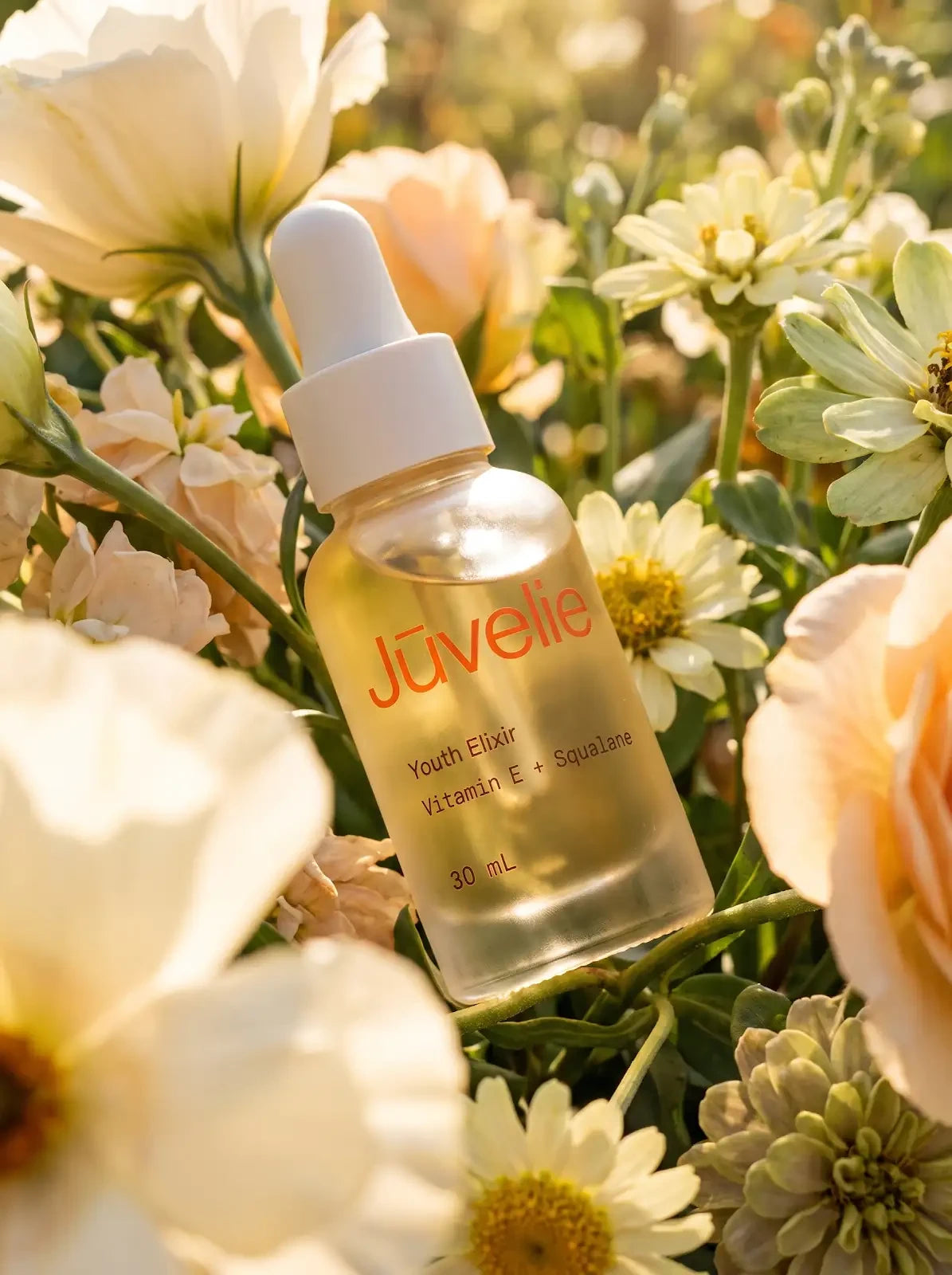
That's the reason I developed the Youth Elixir and started Jūvelie.
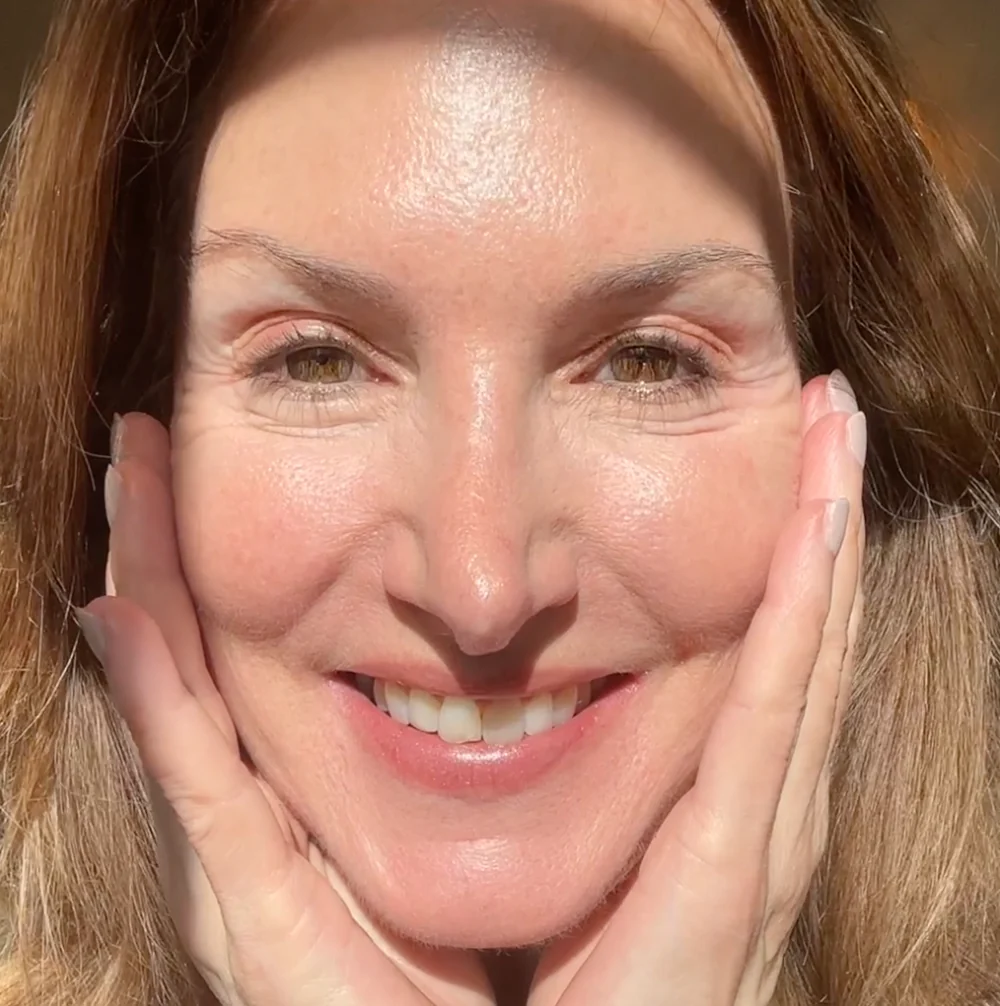
The formula targets one mechanism, which is the root cause of most women's dry or flaky skin.
And it solves the problem at the root, rather than acting as a topical band-aid like other moisturisers, serums or masks.
With just two ingredients - Vitamin E and olive-derived Squalane, we've helped over 13,000 women fix their chronically dry skin.
I no longer moisturise, I don't even use a cleanser. The only product I keep on my bathroom shelf is my own, because I know exactly what's in it, and I know it works.
JŪVELIE YOUTH ELIXIR
Target the root of your dry skin with Jūvelie.
 1 / 13